India · September 2024
Chandigarh
A day of gardens at the start of a longer loop — a pagoda in Sector 31, a garden built at night out of broken crockery, and a lake with a storm coming over it.

One day at the start of a longer loop, before Amritsar and the Kangra valley. Chandigarh is the one Indian city that was drawn before it was built — Le Corbusier's grid of numbered sectors, each meant to hold everything its residents needed. The three places worth a morning and an afternoon are all, in different ways, gardens.

Fig. 1 A temple on the way in, a little after eleven.
The Japanese Garden, Sector 31

Newer than most of the city and not subtle about its theme: a five-tiered pagoda, a red bridge, stone lanterns, a torii gate at the far end. It is laid out over what used to be a drainage channel, which is why the levels keep changing under you.

A dragon, in the middle of the lawn.

Stone figures along the path.

Fig. 4 A Buddha under the trees, at the quiet end.

Palms on the upper lawn.

The torii, and the steps down past it.
Nek Chand's Rock Garden
Nek Chand was a roads inspector. From 1957 he spent his nights on a patch of government forest land building a secret garden out of what the city threw away — broken bangles, sockets, tiles, sanitary ware, stones carried in on a bicycle. It was entirely illegal, and by the time inspectors found it in 1975 it covered about twelve acres and was too loved to demolish. They gave him a salary and fifty labourers instead.

Fig. 7 The waterfall wall, which is fed by recycled water.

Walls of rubble and cement, with the huts set into them.

Everything funnels you through arches.

Fig. 10 The pool below the falls.
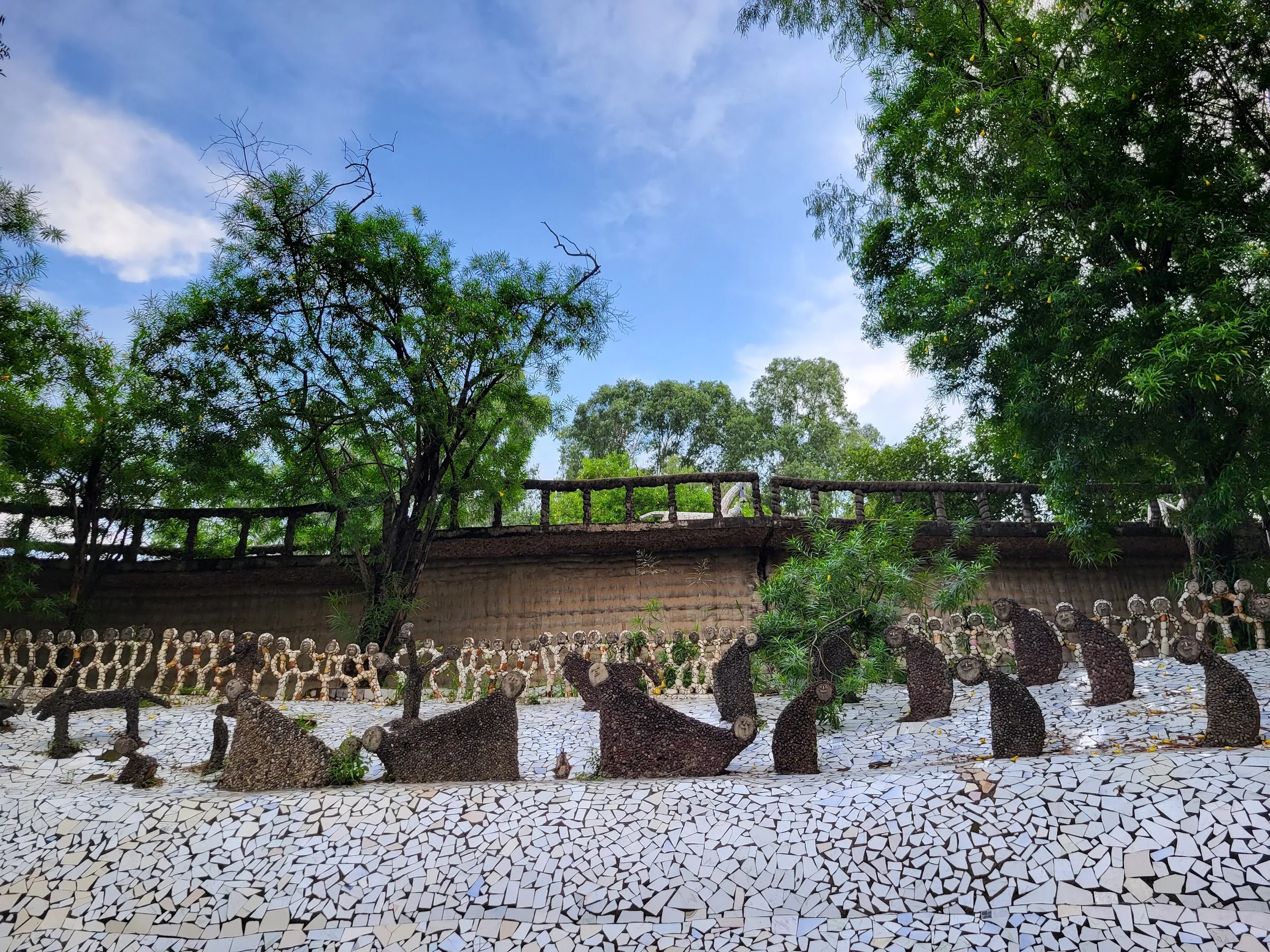


Figs. 11—13 A ceramic amphitheatre; the figures, made from broken bangles; and the path through the middle of it.
Built at night, out of what the city discarded, by a man with no permission to build anything.

Fig. 14 The swings, at the far end.
Sukhna, before the rain

The lake is artificial — dammed off a seasonal stream in 1958, with Le Corbusier insisting no motorboats and no road along the water, so the whole of it stays quiet.
The sky had been building all afternoon and broke about an hour after this.

Fig. 15 On the promenade, with the storm coming in.